
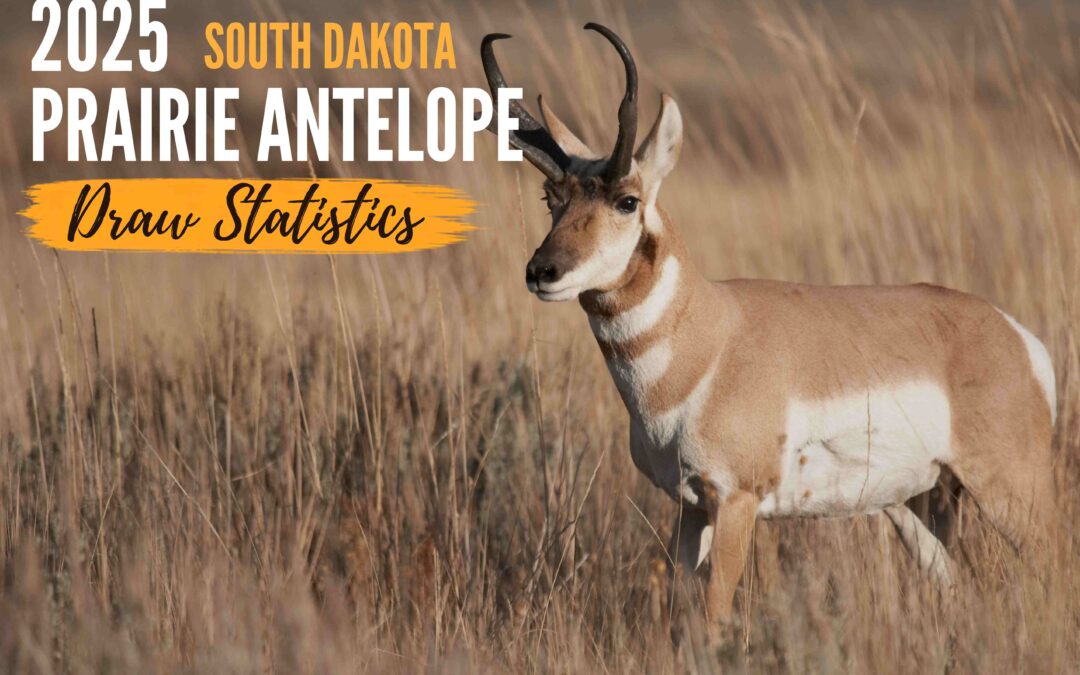
South Dakota continues to offer some of the most exciting pronghorn antelope hunting opportunities in the Midwest. Every year, hunters closely monitor the draw statistics to better understand which units are becoming more competitive and where the best opportunities exist to draw a tag.
The 2025 South Dakota Prairie Antelope draw statistics reveal significant differences between hunt units. While some areas remain relatively accessible to hunters with few or no preference points, others have become highly competitive and require years of planning.
For resident and nonresident hunters alike, understanding these trends can help build a smarter application strategy for future seasons.
Understanding South Dakota Antelope Draws
South Dakota allocates antelope licenses through a draw system. Applicants earn preference points when unsuccessful, which improves their chances of drawing in future years.
Generally speaking:
- More preference points increase draw odds
- Premium units require more points
- Easier-to-draw units often allow hunters to draw with fewer points
- Nonresident tags are usually more competitive than resident tags
The 2025 draw statistics clearly illustrate these differences.
2025 Prairie Antelope Unit Comparison
| Unit | Resident Applicants | Resident Licenses Issued | Difficulty |
| 49A | 276 | 209 | Easy to Moderate |
| 60A | 10 | 4 | Moderate |
| 15A | 262 | 45 | Difficult |
These three units provide a good snapshot of how dramatically draw odds can vary across South Dakota.
Unit 49A: An Accessible Antelope Opportunity
Unit 49A was one of the more accessible prairie antelope units in 2025.
Key Statistics
- 276 resident applicants
- 209 licenses issued
- Hunters with one preference point had a 100% draw success rate
- Many hunters with zero preference points successfully drew licenses
What This Means
For hunters looking to experience antelope hunting without waiting years to build preference points, Unit 49A offered an excellent opportunity.
The fact that 159 licenses were issued to applicants with zero preference points demonstrates that this unit remains relatively attainable for resident hunters.
While demand was healthy, the number of available licenses was sufficient to accommodate a large percentage of applicants.
Unit 15A: A Premium Antelope Unit
Unit 15A tells a completely different story.
Key Statistics
- 262 resident non-landowner applicants
- Only 45 resident licenses issued
- 48 nonresident applicants competed for a single available tag
Preference Point Requirements
Hunters with:
- 6 points drew successfully
- 5 points drew successfully
- Most hunters with 4 points drew
- Less than half of hunters with 3 points drew
- Very few hunters with 2 points drew
- No hunters with 1 or 0 points drew
For nonresidents, the draw was even more competitive. Only one nonresident tag was issued, and it was drawn by an applicant with a high preference point total.
What This Means
Unit 15A has clearly become a premium antelope destination.
Hunters interested in this area should view it as a long-term investment and expect to build preference points before applying.
For both residents and nonresidents, this is not a unit where applicants can realistically expect to draw with minimal points.
Unit 60A: Limited Opportunity, Limited Tags
Unit 60A offered a very small number of licenses in 2025.
Key Statistics
- Only four resident non-landowner licenses issued
- Six resident applicants with zero points did not draw
- All successful resident applicants possessed one preference point
- Only one nonresident license was issued
What This Means
Because of the limited number of available tags, Unit 60A was considerably more difficult than Unit 49A despite having far fewer applicants.
In low-quota units, even small increases in demand can dramatically impact draw odds.
Hunters targeting these units should pay close attention to annual draw statistics before applying.
Resident vs Nonresident Draw Odds
One of the clearest trends from the 2025 antelope draw was the difference between resident and nonresident opportunities.
Residents generally had:
- More tags available
- Better draw odds
- Greater flexibility when applying
Nonresidents faced:
- Limited license allocations
- Higher competition
- Greater reliance on preference points
This trend is common across many western hunting states and reinforces the importance of long-term planning for nonresident hunters.
What Hunters Should Expect Going Forward
The 2025 South Dakota Prairie Antelope draw statistics highlight an important reality: not all hunt units are created equal. Draw odds, tag availability, and the number of preference points required can vary dramatically from one unit to another.
Some Units Offer Better Draw Opportunities
Units such as 49A continue to provide good opportunities for hunters looking to draw a tag without spending years building preference points. With a large number of licenses available, even hunters with zero preference points had success in the 2025 draw.
For hunters whose primary goal is to experience a South Dakota antelope hunt, these types of units may offer the most realistic path to getting into the field sooner.
Premium Units Require Long-Term Planning
On the other hand, highly sought-after units such as 15A remain extremely competitive. The 2025 statistics show that hunters generally needed multiple preference points to have a realistic chance of drawing a license, while applicants with one or no points were largely unsuccessful.
These units often attract hunters seeking specific areas, lower hunting pressure, or higher-quality hunting experiences, which increases competition and demand.
Understanding Your Hunting Goals
The draw statistics demonstrate that hunters should tailor their application strategy to their goals.
If your objective is simply to draw a tag and hunt antelope in South Dakota, there are units where applicants can be successful with few or even no preference points. However, if you are targeting a premium unit, building preference points and taking a long-term approach will significantly improve your chances of success.
Planning for Future Draws
Before applying, hunters should review recent draw statistics, evaluate the number of preference points they hold, and decide whether they want to maximize their chances of drawing a tag or hold out for a more competitive unit.
By understanding the trends within each hunt area, hunters can make informed decisions and develop a strategy that best matches their expectations and hunting goals.
Wrapping Up
The 2025 South Dakota Prairie Antelope draw statistics reveal a wide range of opportunities for hunters. Some units remain relatively accessible, while others have become highly competitive and require long-term planning.
Understanding these trends can help hunters choose the right unit, develop a realistic application strategy, and maximize their chances of drawing a tag in future seasons.
Whether you’re looking for a readily available antelope hunt or saving points for a premium unit, South Dakota continues to offer some of the best pronghorn hunting opportunities in the Midwest.