
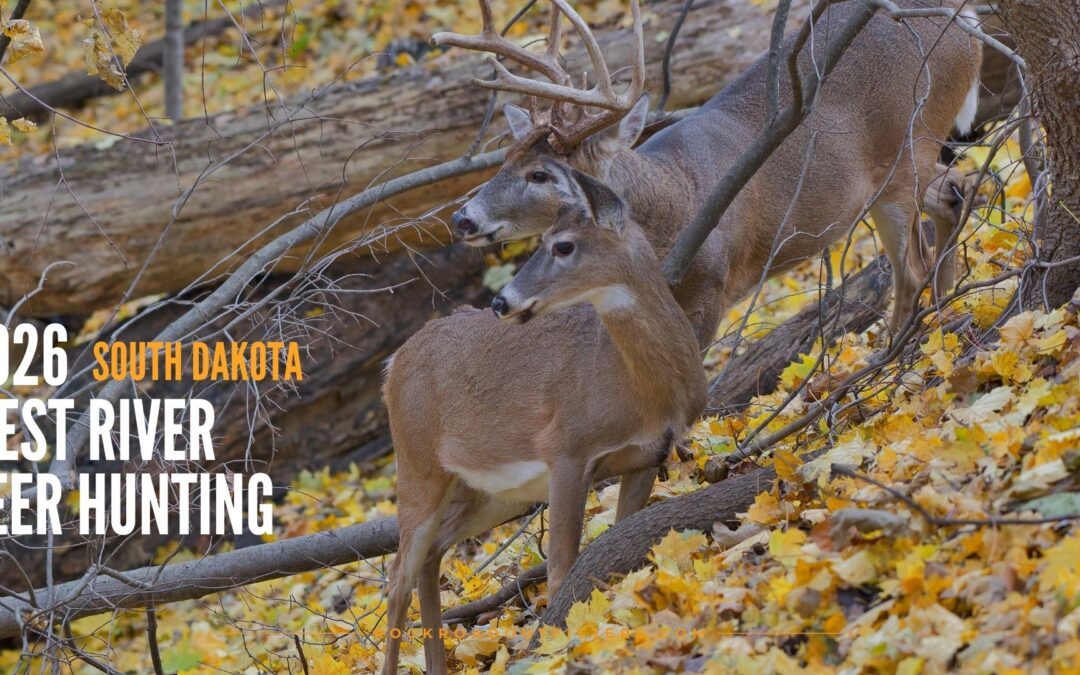
For hunters looking for a true western deer hunting experience, West River deer hunting in South Dakota offers a unique combination of open prairie, rugged breaks, river country, agricultural land, and diverse deer habitat.
The area west of the Missouri River supports both mule deer and whitetail deer, giving hunters the opportunity to experience two very different styles of deer hunting within the same broad region.
For 2026, the regular West River Deer season is scheduled for November 14 through November 29. There are specific exceptions for certain units, so hunters should always verify the regulations for their individual hunting unit before heading into the field.
Whether you are planning your first South Dakota deer hunt or returning for another season, understanding the terrain, deer species, licensing system, weather, and hunting strategies can help you prepare.
Mule Deer Hunting
Mule deer are one of the biggest attractions for hunters traveling to western South Dakota.
The species is well suited to the region’s combination of open country and broken terrain. Hunters may find mule deer using:
- Deep draws
- River breaks
- Rolling hills
- Sagebrush country
- Open prairie
- Rugged bedding areas
- Agricultural edges
One of the most effective approaches to hunting mule deer in this type of country is spot-and-stalk hunting.
Hunters can use elevated terrain to glass large areas, locate deer, identify a buck, and then plan an approach based on terrain and wind direction.
This style of hunting is one of the things that makes West River South Dakota appealing to hunters looking for a western hunting experience.
Whitetail Deer Hunting
West River is not exclusively mule deer country. Whitetail deer are also an important part of the region’s hunting opportunities.
Whitetails are often associated with areas offering more cover and dependable food sources, including:
- River bottoms
- Creek bottoms
- Shelterbelts
- Agricultural fields
- Brushy draws
- Thick cover
This can create a very different hunting experience from pursuing mule deer across open breaks and prairie.
Hunters targeting whitetails may spend more time identifying travel corridors, bedding areas, feeding areas, funnels, and areas where deer move between cover and food.
The 2026 West River Deer regulations include Any Whitetail Deer licenses in a number of units, although license types and quotas vary by unit.
2026 West River Deer Season
The regular 2026 West River Deer season runs from November 14 through November 29.
There are exceptions:
- Unit 30A: November 7–10 and November 23–29
- Unit 58D: November 21–22
These exceptions make it particularly important to check the regulations for the exact unit printed on your license.
There is also an antlerless-only period from December 12 through December 20, but only licenses specifically designated as antlerless are valid during that period. Any Deer, Any Buck, and Any Whitetail licenses do not become valid for the antlerless-only season.
Understanding West River Deer Licenses
South Dakota offers several different West River Deer license types.
Depending on the hunting unit, options can include:
- One Any Deer
- One Any Buck Deer
- One Any Antlerless Deer
- One Any Whitetail Deer
- Combination deer licenses
- Antlerless Whitetail licenses
Not every license type is available in every unit. License availability and quotas vary considerably across the West River hunting units.
For example, the 2026 regulations show that Unit 60A offers both One Any Deer and One Any Whitetail Deer licenses, while other units have different combinations of license types.
This is why hunters should select their hunting unit and license type carefully when applying.
Applying for a West River Deer License
West River Deer is part of South Dakota’s combined deer draw. The number and type of applications a hunter can submit can depend on other deer applications and licenses held during the year.
For 2026, the regular West River Deer application schedule was:
| Draw | Application Period | Results |
| First | May 27–June 23 | July 2 |
| Second | July 8–July 22 | July 27 |
| Third | July 29–August 12 | August 14 |
| Fourth | August 18–September 1 | September 4 |
| Leftovers | Beginning September 9 | Subject to availability |
The application deadline is 8 a.m. Central Time on the applicable closing date.
Because licenses can remain available after earlier drawings, hunters should continue checking the official license availability information if they were unsuccessful in an earlier draw.
Preference Points and West River Deer
Preference points can play an important role in South Dakota’s limited-license deer draws.
However, draw odds vary considerably by hunting unit, license type, residency, and the number of applicants competing for available licenses.
Rather than assuming that a specific number of preference points guarantees a license, hunters should review the most recent draw statistics for the particular unit and license they are considering.
South Dakota allows applicants who are unsuccessful in their first choice to purchase a preference point through the application process or during the annual preference-point purchase period, subject to the state’s rules.
For hunters planning to return to South Dakota over multiple years, understanding how preference points work can be an important part of building a long-term application strategy.
Choosing a West River Hunting Unit
There is no single “best” West River deer unit for every hunter.
The right unit depends on what you want from your hunt.
Consider:
Species
Are you primarily interested in mule deer, whitetail deer, or either species?
Terrain
Do you prefer open prairie and broken country, or river bottoms and thicker cover?
Access
Understanding whether your chosen unit provides suitable public or private hunting access is essential.
Draw Odds
Some units have substantially different license quotas and applicant demand.
Hunting Style
Consider whether you prefer spot-and-stalk hunting, glassing, still hunting, or hunting from strategic positions around cover and food.
Spot-and-Stalk Hunting for Mule Deer
Spot-and-stalk hunting is particularly well suited to many West River landscapes.
A typical hunt may involve:
- Finding an elevated glassing position
- Systematically searching hillsides and draws
- Identifying deer
- Determining whether a buck is worth pursuing
- Planning a route using terrain and wind
- Making a careful stalk
- Reassessing the situation before taking a shot
The openness of much of West River country means deer can sometimes be spotted from considerable distances.
At the same time, getting within shooting range can be difficult because deer can use ridges, draws, and terrain folds to disappear from view.
Hunting Whitetails in River and Agricultural Country
Whitetail hunting often requires a different approach.
Rather than glassing huge expanses of open terrain, hunters may concentrate on:
- River bottoms
- Creek crossings
- Brush lines
- Shelterbelts
- Agricultural fields
- Bedding cover
- Travel corridors
Identifying where deer move between bedding and feeding areas can be particularly important.
Weather, hunting pressure, food availability, and rut activity can all influence movement.
November Weather in South Dakota
One of the most important things to prepare for is the weather.
November in South Dakota can bring rapidly changing conditions, including:
- Cold temperatures
- Strong winds
- Snow
- Freezing conditions
- Mild sunny days
- Sudden weather changes
Hunters should be prepared for conditions to change throughout the day.
Layered clothing, waterproof outerwear, insulated footwear, gloves, and warm headwear can make a major difference during a long day in the field.
Wind can also influence how hunters approach deer, particularly in open terrain.
Hunting During the Rut
The timing of the West River Deer season can provide opportunities to encounter increased rut activity.
As the rut progresses, hunters may observe:
- Increased buck movement
- Bucks searching for does
- More daytime activity
- Bucks moving between cover
- Increased interaction between bucks and does
However, rut activity can vary depending on species, weather, location, and timing.
Rather than relying entirely on the rut, hunters should continue to focus on fundamentals such as wind, terrain, food sources, bedding areas, and deer movement.
Preparing for Your West River Deer Hunt
A successful hunt begins well before arriving in South Dakota.
Equipment to Consider
- Quality binoculars
- Spotting scope
- Rangefinder
- Appropriate rifle and ammunition
- Shooting rest or bipod
- Layered clothing
- Waterproof outer layer
- Insulated boots
- Warm gloves and hat
- Backpack
- Knife and field-dressing equipment
- Hunting license and required documentation
Hunters should also become familiar with their hunting unit before arriving.
Understanding the terrain and identifying potential hunting areas ahead of time can save valuable time once the season begins.
Guided West River Deer Hunting
For hunters traveling from outside South Dakota, a guided hunt can provide valuable local knowledge and access to hunting properties.
A professional outfitter can help hunters with:
- Hunting property access
- Understanding local terrain
- Locating deer
- Identifying likely travel routes
- Planning stalks
- Adapting to changing conditions
- Field care and trophy preparation
This can be especially valuable for hunters who are unfamiliar with the open prairie and broken terrain of western South Dakota.
Why Hunt West River South Dakota?
West River offers a combination of landscapes and hunting opportunities that makes it an attractive destination for deer hunters.
Hunters can experience:
- Mule deer
- Whitetail deer
- Open prairie
- Rugged breaks
- River country
- Agricultural landscapes
- Spot-and-stalk opportunities
- November deer hunting
- Challenging and changing weather
For hunters looking for a western-style deer hunt without heading farther into the Rocky Mountain states, South Dakota offers a compelling alternative.
Getting Ready for a West River Deer Hunt
West River deer hunting in South Dakota provides hunters with the opportunity to pursue mule deer and whitetail deer across a diverse western landscape.
The combination of open prairie, rugged breaks, river bottoms, agricultural country, and November deer movement creates a challenging and rewarding hunting experience.
The key to preparing for a successful hunt is understanding the specific unit, license type, access, terrain, and current regulations before arriving.
For 2026, the regular West River Deer season is scheduled for November 14 through November 29, with specific exceptions for Units 30A and 58D. Hunters should always verify current regulations and license requirements directly with South Dakota Game, Fish and Parks before their hunt.